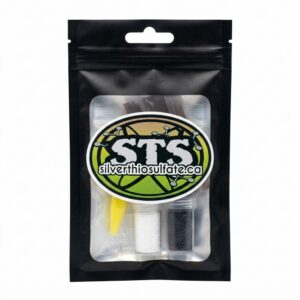

Light Sensitivity: Why STS Stock Solutions Need Dark Storage is part of the silverthiosulfate.ca plant-breeding guide library for growers, nurseries, university labs, and private horticulture programs that need accurate information about STS dark storage. The goal is practical: explain how silver thiosulfate works as an ethylene-response inhibitor, where it belongs in a responsible breeding workflow, and how to document results without overclaiming what one treatment can do.
Why This Topic Matters
Light sensitivity is a common buyer concern and a key reason amber bottles are an ecommerce advantage. Ethylene signaling affects flower development, stress response, senescence, abscission, and crop-specific sex expression. STS is valuable because the thiosulfate complex improves movement and handling compared with free silver salts, while still requiring careful safety controls. For any facility storing silver thiosulfate components, the best results come from matching the plant stage, environment, cultivar sensitivity, and application record rather than copying a generic recipe.

How Silver Thiosulfate Works in Plant Breeding
Silver thiosulfate is commonly discussed as an ethylene inhibitor for plants. In simple terms, silver ions interfere with ethylene perception; the thiosulfate complex helps keep the active silver in a usable form long enough for controlled horticulture work. That mechanism is relevant to gynoecious cucumber line maintenance, squash and pumpkin floral research, melon and bitter gourd breeding, cassava flowering programs, and ornamental flower handling.
Crop-Specific Use Case
This guide gives a plain-English storage answer for customers searching why STS changes color or loses performance. silverthiosulfate.ca content intentionally uses crop-specific language because a cucumber greenhouse, cassava nursery, and ornamental propagation bench do not behave the same way. Searchers looking for silver thiosulfate spray, STS spray kit, silver thiosulfate solution, or plant breeding spray should find a guide that separates broad chemistry from crop-specific decision points.
Responsible Method Framework
- Confirm the crop, cultivar, growth stage, and research or nursery objective before any treatment.
- Review the SDS for the active reagents, the active reagents, and the finished STS working solution.
- Use gloves, eye protection, protective clothing, containment trays, and good ventilation.
- Use clean water, light-protected containers, and labeled equipment dedicated to plant-breeding work.
- Use amber containers, minimize cap-open time, date every bottle, and keep stock away from direct sun, grow lights, heat, and contamination.
- Label treated plants clearly and keep treated tissue out of food, feed, compost, and unmanaged runoff unless a qualified compliance review says otherwise.
- Record date, concentration, cultivar, temperature, humidity, application zone, visible response, and any leaf-marking or stress.
What to Optimize
Summary
For general horticulture, silver thiosulfate STS spray should be presented as a controlled plant-breeding and plant-science tool, not as a lifestyle product. The strongest SEO path is truthful expertise: clean product structure, clear safety instructions, crop-specific guides, original images, cited science, and internal links from every guide to the relevant silverthiosulfate.ca kit, refill, PPE, and storage products.