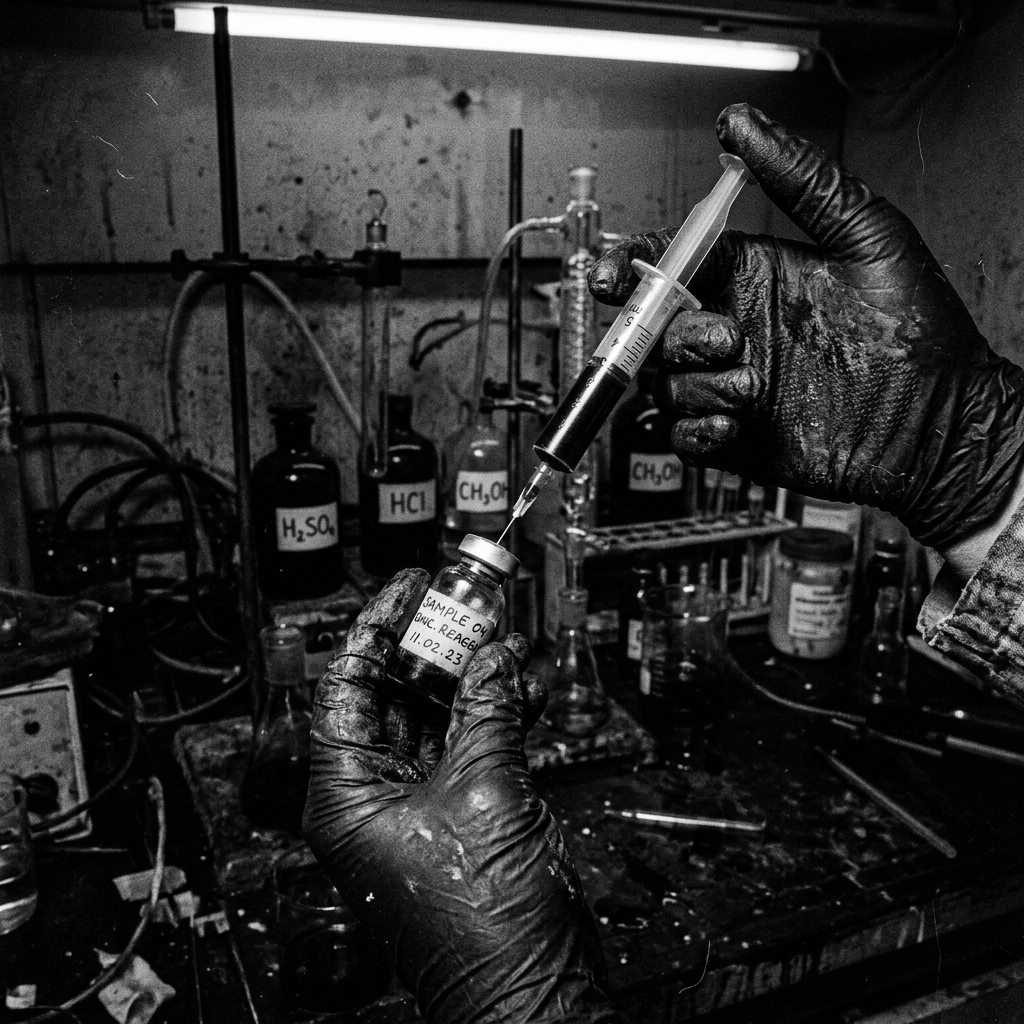
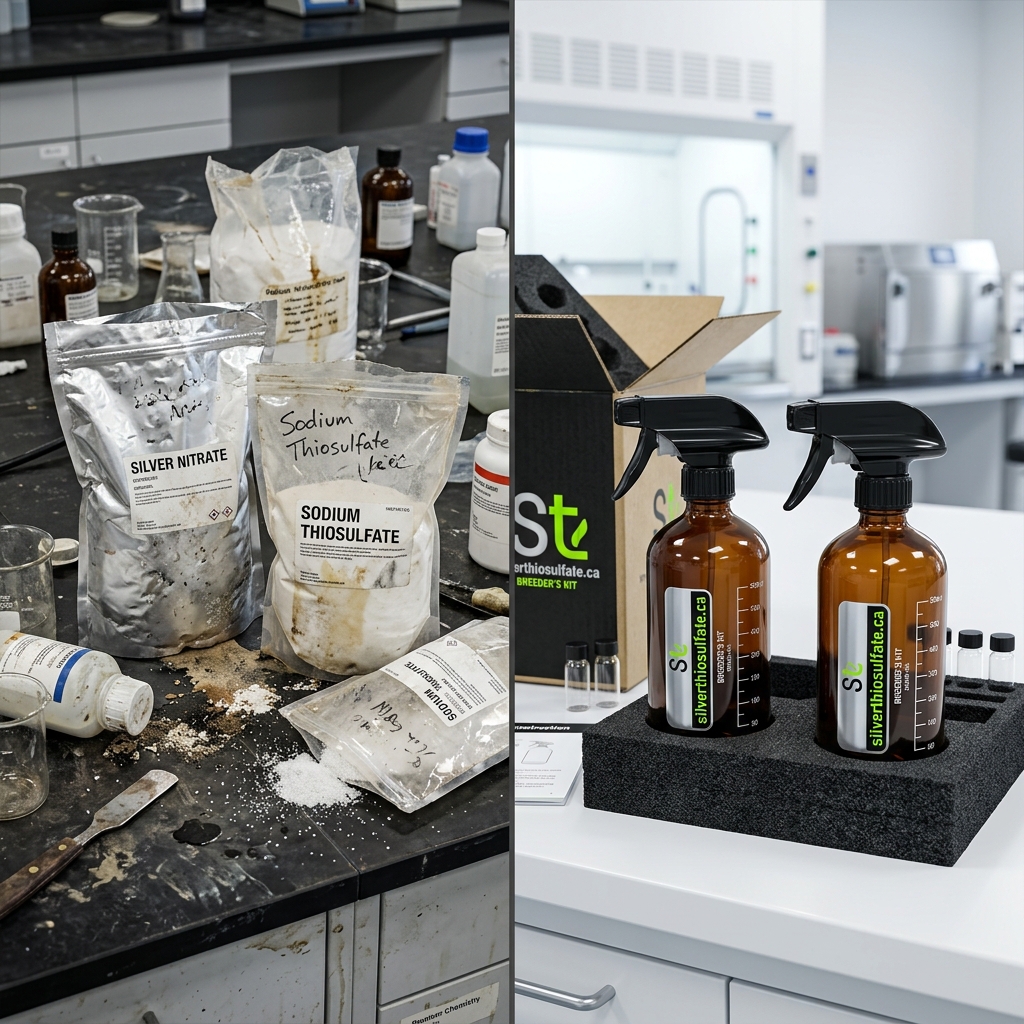
Silver Thiosulfate is an incredibly powerful tool for high-value botanicals breeders, but it requires respect. The active components, particularly the active reagents, are caustic, toxic to aquatic life, and can cause severe staining and irritation if handled improperly.
Understanding the Risks
Skin and Eye Irritation
the active reagents is highly corrosive. If it contacts your skin, it will cause chemical burns and leave a distinct, dark black stain that can take weeks to wear off as your skin naturally exfoliates. If it contacts your eyes, it can cause severe, permanent damage.
Environmental Toxicity
Silver is a heavy metal and is highly toxic to aquatic life. Never pour excess STS solution down the drain. It must be disposed of properly according to your local hazardous waste guidelines.
Required Personal Protective Equipment (PPE)
- Nitrile Gloves: Always wear thick, chemical-resistant nitrile gloves when measuring, mixing, or spraying STS. Latex is often insufficient.
- ANSI Safety Goggles: Protect your eyes from accidental splashes during the mixing phase and from aerosolized droplets during the spraying phase.
- Respirator: An N95 or superior particulate respirator is highly recommended during the spraying phase to prevent inhalation of aerosolized heavy metals.
- Protective Clothing: A Tyvek suit or long sleeves and pants should be worn to prevent skin contact.
Safe Spraying Practices
Never spray STS in your main flowering room or near plants intended for consumption. Always isolate the donor plant in a separate area. Ensure the area has adequate ventilation, but turn off active fans during application to prevent the spray from blowing back onto you.
Crucial Rule: Never, under any circumstances, use tobacco extract, or consume any plant material that has been treated with Silver Thiosulfate. The heavy metals remain in the plant tissue permanently. Once the pollen has been collected, the treated plant must be destroyed.